Songwriting & Music Production
Music created from ideas, emotions and stories
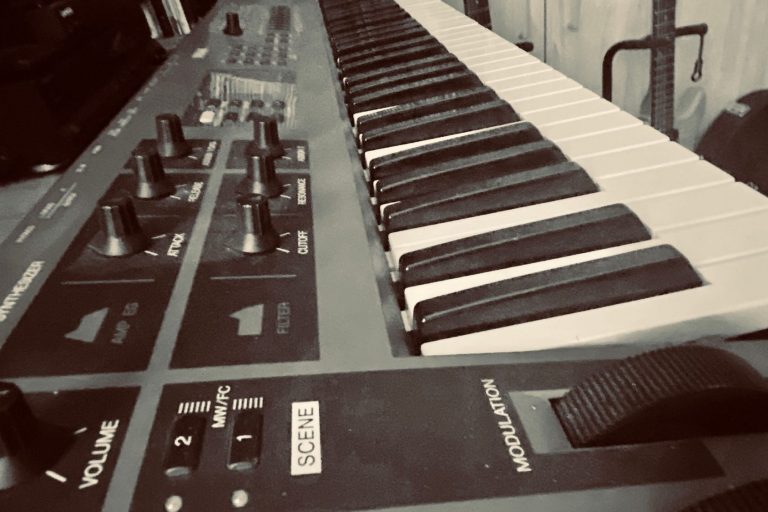
Every composition begins with an original musical idea. A melody is usually sketched on a synthesiser, while chord progressions are developed on the guitar. These first recordings provide the creative foundation from which each song begins to grow.
The songwriting process follows a traditional path. From these initial ideas, the hook gradually emerges, followed by verses, pre-choruses, choruses and bridges. As the composition evolves, additional musical elements such as tempo changes, key changes, dynamic contrasts and new sections are carefully introduced. Step by step, the individual parts come together to form a complete song.
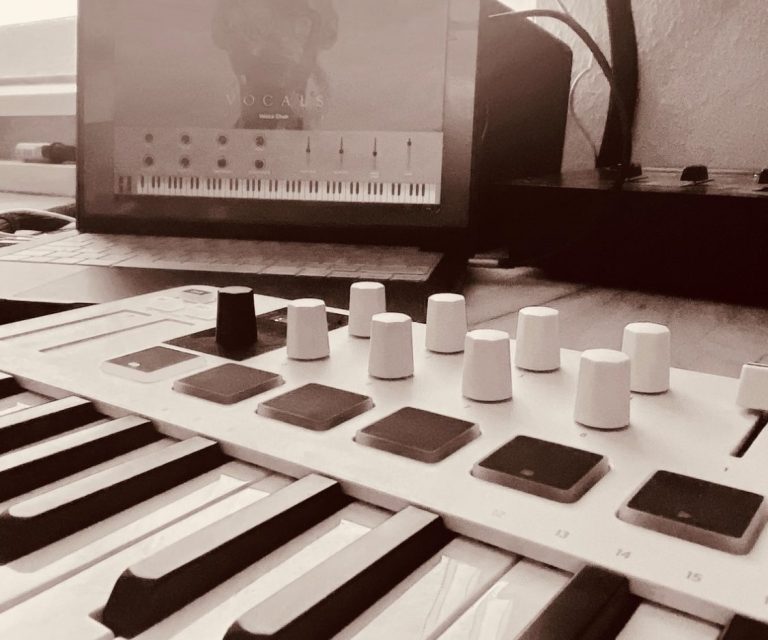
Once the melody and the basic song structure have been established, the creative focus shifts to the song's musical identity. At this stage, atmosphere, emotion and imagery become the guiding elements. Every decision regarding style, instrumentation and arrangement is made to support the story the music is intended to tell.
This phase is particularly important because the chosen style influences every subsequent production decision. A major stylistic change—for example, from metalcore to a minimalist piano arrangement—may require large parts of the song to be rebuilt from an earlier version. For this reason, the artistic direction is carefully considered before production continues.
The melody, harmony, song structure and overall artistic vision are created by TMF. AI-assisted production tools are then used to explore, realise and refine instrumentation, orchestral textures and different performance styles that would otherwise require extensive recording resources. Every generated element is carefully evaluated, selected and adapted to serve the original musical concept.
The production process is highly iterative. Instrumentation, articulation, dynamics, spatial depth, ambience and the character of each individual sound are refined over many sessions. Rather than replacing creativity, AI functions as a production tool that supports experimentation and allows musical ideas to be realised with greater depth and flexibility.
Particular care is required when creating crossover compositions. Different genres, arrangements and musical textures must flow naturally into one another while preserving their individual character. The aim is to create seamless transitions that allow contrasting musical worlds to become a coherent and emotionally engaging listening experience.
Finally, every song is reviewed, refined and balanced until composition, arrangement and production work together as a single artistic whole. The objective is not technical perfection alone, but music that conveys emotion, tells a story and creates a lasting connection with the listener.